Search This Blog

Showing posts with label 38 - CHOLESTEROL. Show all posts

Sunday, November 8, 2015

Cholesterol is finally officially removed from Naughty List

Cholesterol is finally officially removed from Naughty List

The US government has finally accepted that cholesterol is not a 'nutrient of concern', doing a U-turn on their warnings

By Nikki Barr

Cholesterol has been on the "naughty" list of nutrients for nearly 40 years, with health officials warning us to stay away from high-cholesterol foods since the 1970s to avoid heart disease and clogged arteries.

"Full-fat dairy products and avocados are high in good fats."

But US officials have finally given the green light for a U-turn on previous warnings, which means eggs, butter, full-fat dairy products, nuts, coconut oil and meat have now been classified as "safe" and have been officially removed from the "nutrients of concern" list.

The US Department of Agriculture, which is responsible for updating the guidelines every five years, stated in its findings for 2015: "Previously, the Dietary Guidelines for Americans recommended that cholesterol intake be limited to no more than 300 mg/day.

"The 2015 DGAC will not bring forward this recommendation because available evidence shows no appreciable relationship between consumption of dietary cholesterol and serum (blood) cholesterol, consistent with the AHA/ACC (American Heart Association / American College of Cardiology) report.

"Cholesterol is not a nutrient of concern for overconsumption."

"Eggs are no longer on the 'naughty list'. "

The Dietary Guidelines Advisory Committee will, in response, no longer warn people against eating high-cholesterol foods and will instead focus on sugar as the main substance of dietary concern.

The 70s, 80s and 90s were the 'non-fat' years, with the government warning people to limit the amount of high-cholesterol foods in their diets to avoid heart disease and strokes.

But nutritionists and scientists have long been campaigning for the U-turn, which started with introducing "good cholesterols" back into the 'safe zone'.

US cardiologist Dr Steven Nissen said: "It's the right decision. We got the dietary guidelines wrong. They've been wrong for decades."

He estimated that about 20 per cent of cholesterol levels in your blood come from your diet, which means the rest is produced by your liver and is actually needed by the body.

Dr Chris Masterjohn added: “Since we cannot possibly eat enough cholesterol to use for our bodies’ daily functions, our bodies make their own.

"When we eat more foods rich in this compound, our bodies make less. If we deprive ourselves of foods high in cholesterol - such as eggs, butter, and liver - our body revs up its cholesterol synthesis."

"Nuts were previously thought to contain too much cholesterol."

Sugar has now been identified as the "worst" food culprit for health problems, with GPs now focusing on weaning patients off the sweet stuff.

Cardiologist Dr Aseem Malhotra, who works with group Action On Sugar, says a clamp-down on the food industry is next.

He said: "It's very clear that added sugar has absolutely no nutritional value whatsoever and, contrary to what the food industry want you to believe, the body doesn't require any carbohydrate for energy from added sugar.

"And we know the food industry have been spiking our food with added sugars. We also know that carbohydrates and particularly refined carbohydrates - so carbohydrates that lack fibre, sugar being one of them - have the biggest impact on insulin in terms of surges of insulin in our body. And insulin is a fat storing hormone." So, in summary, ditch your skinny latte for a full-fat latte and get some avocados down you.


Wednesday, July 22, 2015

Can you lower your cholesterol just by changing your diet?


Can you lower your cholesterol just by changing your diet?
·         21 July 2015
·         From the section Magazine


Statins are used to lower cholesterol but how much can be achieved with changes to diet alone, asks Michael Mosley.

Over the many years that I've been making science documentaries I've covered a huge range of subjects, but there is one that is of particular personal interest. My family tree is riddled with heart disease and I know that, unchecked, my cholesterol scores tend to soar.

I am not alone - 60% of people in Britain have cholesterol levels that are too high and increasingly we are recommended to go on statins. Yet statins have side effects and many people are reluctant to go on a lifetime of pills.

So, for the current series of Trust Me, I'm a Doctor, we wanted to see if you could lower your cholesterol just as effectively by changing your diet.

We asked Dr Scott Harding from Kings College, London to help us set up and run a small study. With his help we recruited 42 volunteers, all of whom had concerns about their cholesterol and were keen to see what they could do without taking medication.

We started by taking blood samples to look at their current levels of total cholesterol.

Cholesterol is complicated stuff. Most of it is made in the liver and then sent to the cells that need it, bound to a lipoprotein called LDL (low density lipoprotein).

LDL is often called "bad cholesterol" because high levels are associated with an increased risk of heart disease. HDL (high density lipoprotein) is known as "good cholesterol" because it carries cholesterol away from the arteries to the liver.

Current recommendations are that levels of "bad" LDL-cholesterol should be less than 3mmol/l (millimoles per litre) and "good" HDL-cholesterol more than 1mmol/l.

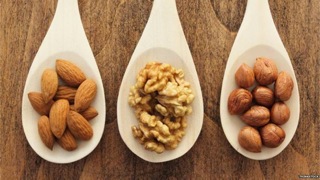
Can almonds, walnuts and hazelnuts reduce cholesterol levels?

Once we had taken their bloods, Scott randomly allocated our volunteers into three groups. Each group was asked to modify their diet in a different way.

The first group was asked to go on a traditional low cholesterol diet. They were asked to switch from animal fats (full fat milk, full fat cheese, butter) to vegetable-based or low fat options. They were asked to cut out eggs, bacon and sausages, and stick to skinless chicken.

The second group wasn't asked to give up any of the foods but were asked to eat 75g of oats a day, equivalent to three servings. Oats are full of fibre and any form of fibre - whether it is from grains, legumes (beans and lentils) or vegetables is likely to lower cholesterol by binding with fat and cholesterol in the gut and stopping it being absorbed.

The third group was asked to eat normally but to add into their diet 60g of almonds a day (two handfuls). In recent years tree nuts such as almonds, walnuts and hazelnuts have become hugely popular thanks to studies which suggest they can lower cholesterol. Tree nuts are rich in fibre and plant sterols which may delay fat and cholesterol absorption.

Clutching their diet sheets, our happy volunteers were sent off to test their new treatments for four weeks.

Rather than doing any one diet I wanted to see if combining elements of all three diets would have a bigger effect. So I cut back a bit on bacon and sausages and added into my diet the almonds and the oats.


This approach is based on something called the Portfolio diet, developed by David AJ Jenkins in Toronto. The idea is to try lots of different cholesterol-lowering approaches at once. The full Portfolio diet includes not only nuts and oats but plant sterols and soya.

Plant sterols are found in fruit, vegetables and nuts, but in low amounts. You can also get them in fortified margarines and yoghurts.

Soya products such as soy milk and soy protein enjoy a reputation as a healthy alternative to dairy, but a few years ago the European Food Safety Authority rejected claims about the benefits of soy on the grounds that most randomised controlled studies don't show an effect. Soy seems to work by inhibiting cholesterol synthesis in the liver. Amounts of 15-25g have been recommended in order to get the maximum effect.
How well does the Portfolio diet work? Well a study published in 2011 found that people who agreed to try the diet for six months saw an average reduction of about 13% in LDL-cholesterol. The best results were obtained by those who stuck closest to it.

Cholesterol


§  Fatty substance known as a lipid, vital for normal body functioning; mainly made by the liver but can also be found in some foods

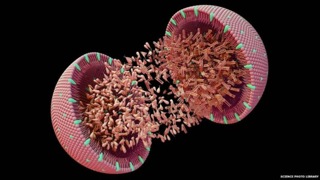
§  Carried in blood by proteins with which it combines to form lipoproteins (illustrated above) - low density lipoproteins (LDLs) carry cholesterol from liver to cells, high density lipoproteins (HDLs) carries cholesterol from cells to liver

§  If LDLs have too much cholesterol, it will build up on artery walls and increase risk of heart disease and stroke


So how did our volunteers get on? The results were not quite as expected. The first surprise was the almond eaters.

"Half the group had a positive response," Scott told me., "And one individual had an 18% reduction in their total cholesterol. On the other side of the coin some people had an adverse response. Their cholesterol actually went up, in some cases significantly."

The raised levels of cholesterol in some almond eaters balanced the falls in others. On average there was no change.
The porridge eaters and the low-animal-fat group did rather better, with an average fall in LDL-cholesterol of 10% and 13% respectively.

The biggest surprise, however, was me. My LDL cholesterol fell by an impressive 42%. This is in line with what most people experience who go on statins.


Why did I do so well? Hard to say. It could be that my combination approach (Portfolio-lite) worked better than doing things in isolation or it could be that my body responds more dramatically to a combination of oats, almonds and bacon-skipping than most people.

So the answer is yes, you can drop your cholesterol significantly through modest changes to diet, but to get as big an effect as you would through taking statins you would probably need to combine a number of different approaches.

The best advice would be to get your bloods taken before and after any dietary change to understand what works best for you.